8 Grande Strasse
The Book Thief8 Grande Strasse, the mayor’s house in the upper part of Molching, begins as an intimidating symbol of wealth and authority but becomes one of the most important interior spaces in Liesel Meminger’s life. Behind its giant brown door is a cold, book-filled room where Liesel discovers the mayor’s wife, Ilsa Hermann, and a library that transforms an unpleasant delivery route into a passage toward reading, memory, and grief.
Setting and First Impression
8 Grande Strasse is described as a large house high on a hill, physically elevated above ordinary life in Molching. Rosa Hubermann reserves her greatest disdain for it, presenting the mayor’s household as rich, idle, and morally objectionable. When she first points it out to Liesel, she calls Bürgermeister Heinz Hermann a crook and describes his wife as both miserly and crazy. Rosa’s instructions are blunt: Liesel is to go to the house herself.
The approach immediately establishes the location as a threshold. Liesel faces a giant brown door, a brass knocker, and a small flight of steps, and her horror shows that the house’s power is not only political or economic. It is architectural. The hill, the steps, and the door separate the child from a household she has been taught to resent and fear. The setting therefore turns a routine task—delivering washing—into an encounter with a higher social world.
The Library Behind the Door
When Liesel eventually enters, the house reverses her expectations. The room is full of cold air and books, with overcrowded but immaculate shelves covering the walls. The books differ in size, color, and lettering, and Liesel regards the room as one of the most beautiful things she has ever seen. The discovery gives 8 Grande Strasse a double identity: it remains the mayor’s residence, but it also becomes a place where language and imagination are visibly accumulated and protected.
The library’s abundance contrasts sharply with Liesel’s circumstances on Himmel Street. Books are not scarce within the room; they are everywhere, available in a quantity that overwhelms her. Her wonder is therefore also a recognition of inequality. The house contains an abundance that the child could not have imagined, yet it does not offer that abundance openly at first. The library is visible only after she crosses the intimidating boundary of the door.
Liesel’s Visits and Ilsa Hermann
Ilsa Hermann initially receives Liesel as part of the household’s washing arrangement, but the visits gradually become centered on the books. On Liesel’s second visit, Ilsa gives her permission to take one book from the shelves and look through it. That permission expands into repeated reading: one book becomes another, and eventually as many as half a dozen are gathered beneath Liesel’s arm or piled in her remaining hand.
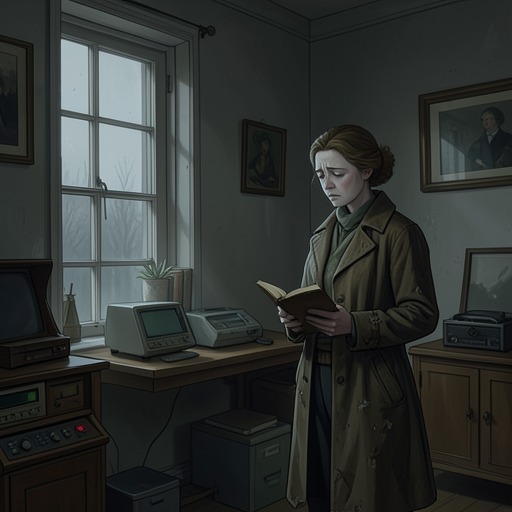
The room also reveals Ilsa’s condition. She watches Liesel only briefly and pays more attention to what is beside her, or to something missing. She sits in a bathrobe near a wide-open window, while the cold air enters the room and Liesel sits on the floor among the scattered books. The house is thus not simply a prosperous setting. Its abundance is haunted by absence, and Ilsa’s silence makes the library feel like a space organized around loss.
For Liesel, the visits combine pleasure with fear. Her criminality as a book thief makes her paranoid, and the mayor’s house becomes part of the punishment even when no one openly accuses her. She imagines detection in ordinary sounds and gestures. Eventually, when she is expected to deliver washing, she deliberately overlooks 8 Grande Strasse, choosing the arthritic Helena Schmidt’s house and the Weingartners’ residence while avoiding the household of Heinz and Ilsa Hermann. The location’s power lies partly in this contradiction: it is the place she most wants to enter and the place she most dreads approaching.
Conflict, Return, and Changing Meaning
When Liesel returns to 8 Grande Strasse after Ilsa gives her The Whistler, the house becomes the destination of an emotional confrontation rather than a domestic errand. The book in her hand tightens as she reacts against the idea that it may have been given out of pity. She is tempted to run, but restrains herself so that she can preserve enough strength for what she intends to say. The mayor’s absence matters: without his car outside, she can approach the house without the immediate presence of the authority she associates with wealth and class division.
She climbs the steps two at a time and strikes the door hard enough to hurt her hand, taking a grim satisfaction in the pain. The familiar entrance is no longer merely frightening; it has become the surface against which Liesel tests her anger, pride, and need. The house remains a place of unequal status, but her return shows that she is no longer simply being sent there by Rosa. She has developed a claim on the space and on the relationship formed inside it.
The location also belongs to a larger pattern of concealed domestic life. When Max Vandenburg arrives at 33 Himmel Street, the people sheltering him must maintain ordinary routines despite overwhelming fear. 8 Grande Strasse, by contrast, contains a different kind of concealment: Ilsa’s grief is held within a grand house, while its library provides Liesel with access to books that the household does not explain directly. Across both homes, doors, rooms, and routines separate public behavior from private truth.
Final Visits and Narrative Significance
In mid-August, Liesel thinks she is going to 8 Grande Strasse for the same remedy as before, intending to cheer herself up. She does not know that she is saying goodbye. That retrospective irony gives the house its final emotional transformation. What once appeared to be a forbidding mansion becomes the site of a relationship whose ending Liesel cannot yet recognize.
8 Grande Strasse therefore functions as more than a location on Liesel’s washing route. It is a threshold between poverty and privilege, obedience and self-direction, public respectability and private sorrow. Its cold library offers books but not uncomplicated comfort; its silence shelters grief while allowing Liesel’s reading life to grow. The house’s decisive significance comes from that tension: it is both closed and generous, elevated and vulnerable, a place of social distance that nevertheless becomes one of the few spaces where Liesel is permitted to encounter the sustaining power of books.